
Back to Blog
    Trading Education
    #trend-reversals
    #trading-strategy
    #simplealgo

    Mastering Trend Reversals: A Complete Guide

    NickTradesNickTrades
    January 21, 20263 min read
    Share:
    Mastering Trend Reversals: A Complete Guide


    Mastering Trend Reversals: A Complete Guide

    Trend reversals are where the biggest profits are made—and lost. Catching a reversal at the right time can lead to massive gains, but getting it wrong can be costly. This guide will teach you how to identify and trade reversals with confidence.

    What is a Trend Reversal?

    A trend reversal occurs when:

  1. An uptrend turns into a downtrend

  2. A downtrend turns into an uptrend

  3. Price changes direction significantly
  4. Reversal vs. Pullback

    Pullback:

  5. Temporary move against the trend

  6. Trend continues after

  7. Smaller magnitude
  8. Reversal:

  9. Fundamental change in direction

  10. New trend begins

  11. Often larger magnitude
  12. Identifying Reversals with SimpleAlgo

    The Trend Cloud

    Watch for these reversal signals:

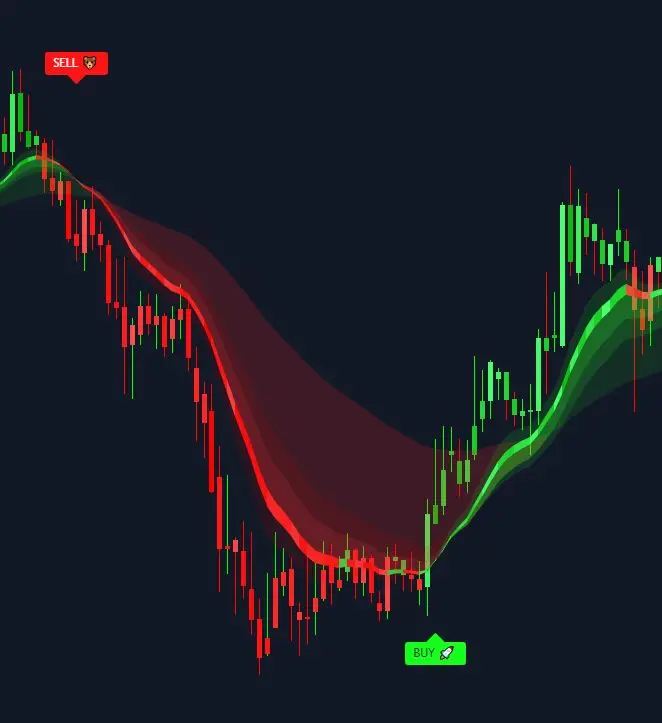
  13. Cloud color change - Green to red or vice versa

  14. Cloud compression - Bands squeeze together

  15. Price piercing - Candles breaking through cloud
  16. Buy/Sell Signals

    Reversal signals appear at:

  17. Major support/resistance levels

  18. After extended trends

  19. With oscillator confirmation
  20. Oscillator Confirmation

    The oscillator shows:

  21. Momentum shift from bullish to bearish

  22. Divergences warning of reversal

  23. Overbought/oversold conditions
  24. The Perfect Reversal Setup

    Step 1: Extended Trend

    Look for trends that have run far:

  25. 20+ candles in one direction

  26. Price far from cloud

  27. Momentum exhaustion
  28. Step 2: Warning Signs

    Watch for early signals:

  29. Oscillator divergence

  30. Weaker momentum bars

  31. Cloud starting to thin
  32. Step 3: Confirmation

    Wait for confirmation:

  33. Trend Cloud color change

  34. Clear reversal signal

  35. Oscillator agreement
  36. Step 4: Entry

    Enter with confidence:

  37. Enter on signal

  38. Place stop above/below recent swing

  39. Target previous support/resistance
  40. Real Examples

    Bullish Reversal Example

    Setup conditions:

  41. Extended downtrend (30+ red candles)

  42. Oscillator showing bullish divergence

  43. Cloud compressing and turning green

  44. BUY signal appears
  45. Result: New uptrend begins, multiple TPs hit

    Bearish Reversal Example

    Setup conditions:

  46. Extended uptrend (25+ green candles)

  47. Oscillator showing bearish divergence

  48. Cloud compressing and turning red

  49. SELL signal appears
  50. Result: New downtrend begins, excellent short opportunity

    Common Mistakes to Avoid

    Mistake 1: Calling Reversals Too Early

    Wait for confirmation:

  51. Cloud must change color

  52. Signal must appear

  53. Don't anticipate
  54. Respect momentum:

  55. Strong trends can continue longer than expected

  56. Wait for exhaustion signs

  57. Use smaller positions
  58. Mistake 3: Ignoring the Oscillator

    Always check confirmation:

  59. Oscillator should agree

  60. Look for divergences

  61. Check momentum strength
  62. Risk Management for Reversals

    Position Sizing

    Reversals are higher risk:

  63. Use smaller positions (50-75% of normal)

  64. Scale in as trend confirms

  65. Never risk more than 1-2% per trade
  66. Stop Placement

    Protect your capital:

  67. Place stops above/below the reversal candle

  68. Use the cloud as a guide

  69. Never widen stops
  70. Conclusion

    Trend reversals offer massive profit potential when traded correctly. Use SimpleAlgo's tools to identify, confirm, and trade reversals with confidence.

    Remember: Patience and confirmation are key to reversal trading success.

    NickTrades

    NickTrades

    Founder of SimpleAlgo and professional trader sharing insights on trading strategies, market analysis, and product updates.

    Related Articles